Lease Agreement Review Checklist: 10 Clauses to Check
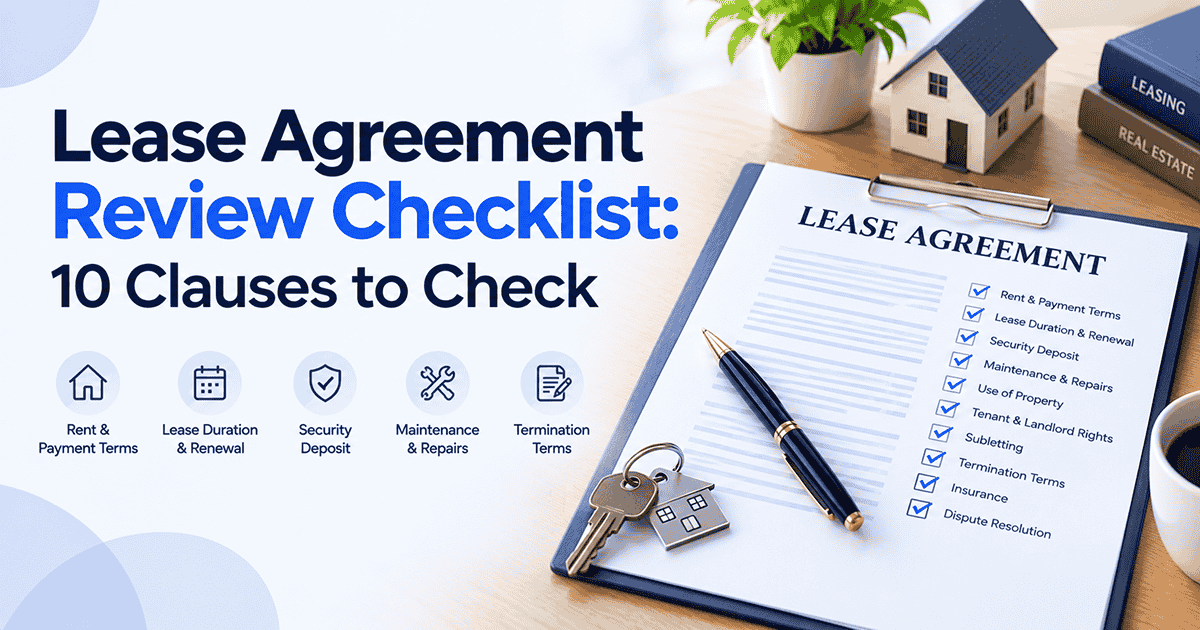
Lease Agreement Review Checklist: 10 Clauses to Check Before You Sign
A lease agreement review checklist can save you from a year of expensive surprises. Most leases look similar at a glance, but the details around fees, renewals, and repairs decide who carries the risk. This guide walks through the 10 clauses to check before you sign, shows how AI speeds up the review, and explains how to sign the finished lease online.
Why Reviewing Your Lease Matters
Picture this. You’ve found the apartment; the landlord says the lease is “just the standard one,” and the move-in date is two weeks away. So you skim, sign, and start packing. Months later, you find out the lease auto-renewed or that a “move-out cleaning fee” you never noticed gets taken from your deposit.
A lease is a binding contract, usually for a year or longer, and it’s written by the landlord or their property manager. That doesn’t make it unfair, but it does mean the defaults tend to favor the person who wrote it. Reviewing it before you sign is the cheapest moment to ask questions. This applies to landlords as well, since a vague lease can leave you without clear remedies when a tenant stops paying.
Lease Agreement Review Checklist: 10 Clauses to Check
Work through these ten in order. If a clause is missing or unclear, ask about it before you sign, and get any change written into the lease itself.
1. Parties, Property, and Lease Term
Start with the basics, and don’t skip them. Names should match the people who are actually signing, the property address and unit number should be exact, and the start and end dates should match what you agreed. Check whether it’s a fixed-term lease or month-to-month, because that decides how easily either side can leave.
2. Rent, Due Date, and Late Fees
Confirm the monthly rent, the due date, and how it’s paid. Look closely at late fees: how many days of grace you get and whether the fee is a flat amount or grows each day. Also check whether the lease allows rent increases during the term and how much notice you’d get.
3. Security Deposit
The deposit clause should state the amount, where it’s held, what it can be used for, and how fast it must be returned after you move out. Many places cap deposits or set rules for returning them, so compare the clause with local law. Take dated photos at move-in either way, since they’re your best evidence if there’s a dispute later.
4. Renewal and Termination
This is where people get caught. Some leases renew automatically unless you give written notice 30, 60, or even 90 days before the end date. Note the notice window and how the notice must be delivered. Also look at early termination: is there a break fee, and is it a fair amount or several months’ rent?
5. Maintenance, Repairs, and Landlord Entry
The lease should say who handles repairs and how quickly the landlord must respond. Be wary of clauses that push all maintenance onto the tenant, including major systems. Check the entry rules too. A reasonable lease requires advance notice before the landlord enters, except in emergencies.
6. Fees and Additional Charges
Rent is rarely the whole bill. Look for utilities, parking, pet fees or pet rent, amenity charges, trash and pest fees, and cleaning charges at move-out. For commercial leases, check for common area maintenance (CAM) charges and taxes passed through to the tenant. If a fee isn’t in the lease, you should ask whether it can be charged at all.
7. Subletting and Assignment
Plans change. If you might need to move early or share the space, check whether subletting or assigning the lease is allowed and whether it needs the landlord’s written consent. A flat ban isn’t always unreasonable, but it’s worth knowing before you need the flexibility.
8. Use Rules and Restrictions
Pets, guests, smoking, noise, parking, running a home business, and making changes to the unit are all common restrictions. None is unusual by itself. The problem is a rule you didn’t expect, such as a limit on overnight guests or a ban on hanging anything on the walls, so read this section slowly.
9. Liability, Insurance, and Indemnity
Many leases require tenants to carry renters insurance, and some ask you to take responsibility for any injury or damage on the property, even when it isn’t your fault. In many places, certain tenant protections can’t be signed away, so a clause that tries to remove them may not hold up. Still, you don’t want to discover that in a dispute.
10. Default, Eviction, and Dispute Terms
Finally, see what counts as a default and whether you get a chance to fix it. Check the notice period before the landlord can start an eviction, and look for clauses about attorney’s fees, holdover rent if you stay past the end date, governing law and where disputes are heard. Balanced terms apply to both sides.
Residential vs. Commercial Leases
The checklist above works for both, but commercial leases add extra layers. They often include personal guarantees, rent escalation formulas, build-out and restoration obligations, and pass-through charges such as taxes, insurance, and maintenance. Commercial leases are also more negotiable, and the stakes are usually higher, so a lawyer review is worth serious thought.
How to Review a Lease with AI
Working through ten clauses carefully takes time, and leases can run to thirty pages of small print. AI turns this checklist into a fast first pass. Our AI lease agreement review tool is built for exactly this, and the same technology is explained in our guide to AI clause detection.
Step 1: Upload the lease. Add the agreement to your Indigo eSign account as a PDF. No setup is needed.
Step 2: See the risks flagged. The AI summarizes the lease in plain English and highlights things like rent escalations, auto-renewals, steep early-termination fees, broad liability waivers and unclear deposit terms. For more on how risk scoring works, see our AI risk analysis guide.
Step 3: Negotiate what needs changing. Use AI redlining to draft replacement wording, so you can send a clear request instead of a vague complaint.
Step 4: Sign online. When both sides agree, add signature fields and send the lease for signing. Signers receive a link and can sign on any device without creating an account, and every signature is backed by an audit trail. The free plan includes up to 5 documents a month and one AI review, which is enough to test it on a real lease.
Property managers and agents who send leases regularly can also read our guide to eSignatures for real estate.
When to Get Professional Advice
AI is a good first reader for a standard residential lease, but it doesn’t replace legal advice or knowledge of local landlord-tenant law. Get a lawyer or a local tenant or landlord association involved if the lease is unusually long, if it’s commercial, if the rent is significant, or if the other side refuses to explain or change a clause that worries you. This article is general information, not legal advice.
Frequently Asked Questions
A: A solid checklist covers the parties and lease term, rent and late fees, security deposit, renewal and termination, maintenance and repairs, additional fees, subletting, use rules, liability and insurance, and default and dispute terms. Check each against what you were promised before you sign.
A: Yes. Many terms are negotiable, especially rent increases, early termination fees, pet rules, and renewal terms. Ask for changes in writing and make sure any agreed change appears in the signed lease, not just in an email or a conversation.
A: Watch for vague fee wording, large or unclear deposit deductions, automatic renewals with long notice periods, steep early termination penalties, broad landlord entry rights, and clauses that ask you to give up rights the law gives you. If something is unclear, ask for it to be clarified.
A: Yes. AI can summarize a lease in plain English and flag unusual or risky clauses such as rent escalations, auto-renewals, and liability waivers. It works best as a quick first review, with a lawyer or local tenant resource handling complex or high-stakes issues.
A: In the United States, electronic signatures are generally valid for leases under the ESIGN Act and UETA, though some local rules and document types have special requirements. Check the rules where the property is located, and keep a copy of the signed lease and its audit trail.